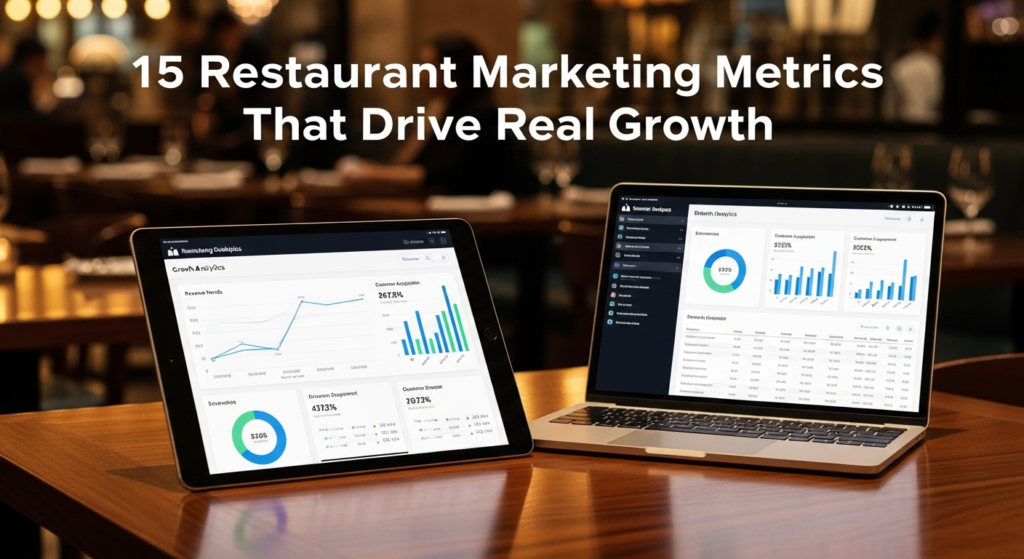
In today’s competitive food industry, guessing your marketing performance is no longer enough. Successful restaurants rely on data-driven marketing metrics to understand what works, what doesn’t, and where to invest next.
Whether you’re running a small café or a multi-location restaurant, tracking the right KPIs (Key Performance Indicators) can help you increase revenue, improve customer retention, and maximize ROI.
In this guide, you’ll discover the 15 most important restaurant marketing metrics that truly drive growth, plus how to use them effectively.
Why Restaurant Marketing Metrics Matter

Tracking marketing metrics allows you to:
- Measure campaign effectiveness
- Reduce wasted advertising spend
- Understand customer behavior
- Make smarter business decisions
Without these insights, you’re essentially operating blind.
Core Restaurant Marketing Metrics You Must Track
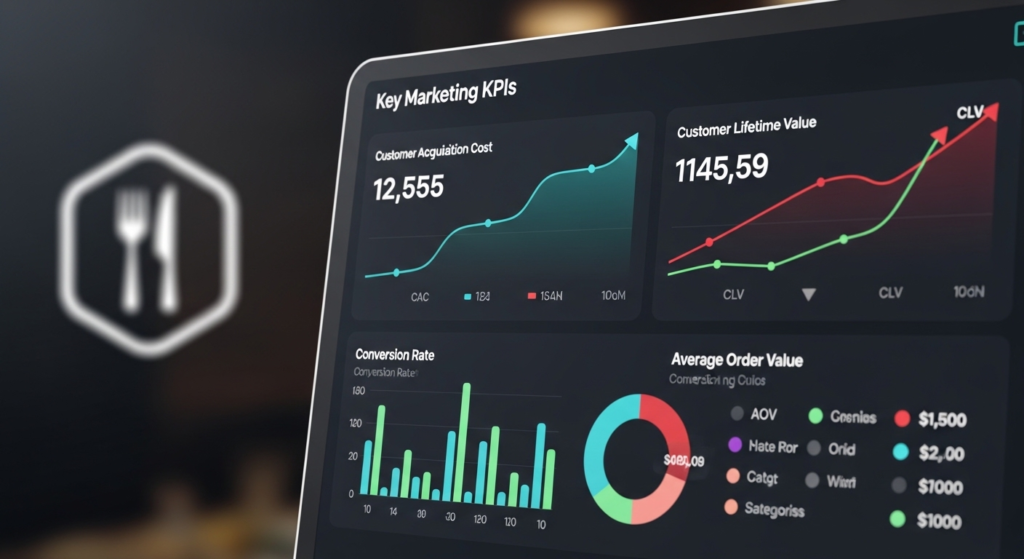
1. Customer Acquisition Cost (CAC)
This metric shows how much you spend to acquire a new customer.
Why it matters:
If CAC is too high, your marketing isn’t sustainable.
How to improve it:
- Optimize ad targeting
- Use organic channels like SEO
- Leverage referrals
2. Customer Lifetime Value (CLV)
CLV measures how much revenue a customer generates over time.
Why it matters:
Repeat customers are more profitable than new ones.
How to increase CLV:
- Loyalty programs
- Personalized offers
- Email marketing
3. Conversion Rate
Tracks how many visitors take action (reserve, order, or call).
Formula:
Conversions ÷ Total Visitors × 100
Optimization tips:
- Improve website speed
- Use clear CTAs
- Add online ordering
4. Average Order Value (AOV)
The average amount spent per order.
How to increase AOV:
- Upselling (e.g., drinks, desserts)
- Combo deals
- Limited-time offers
5. Online Reservation Rate
Measures how many website visitors book a table.
Why it matters:
Direct indicator of marketing success.
Digital Marketing Metrics for Restaurants
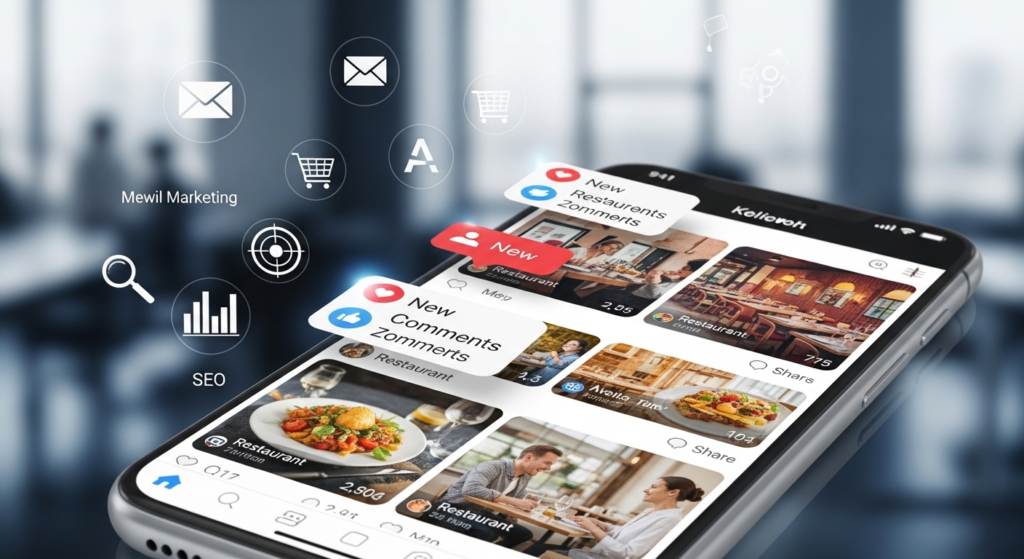
6. Website Traffic
Tracks how many people visit your website.
Breakdown:
- Organic (SEO)
- Paid ads
- Social media
7. Click-Through Rate (CTR)
Measures how many users click on your ads or emails.
Improvement strategies:
- Strong headlines
- High-quality images
- Clear offers
8. Social Media Engagement
Includes likes, shares, comments, and saves.
Why it matters:
Engagement = brand awareness + trust.
9. Email Marketing Performance
Track:
- Open rate
- Click rate
- Conversion rate
Pro tip:
Email remains one of the highest ROI channels.
10. Bounce Rate
The percentage of users who leave your website quickly.
Fix it by:
- Improving design
- Faster load times
- Better content
Local SEO & Visibility Metrics
11. Google Business Profile Insights
Track:
- Calls
- Direction requests
- Website clicks
Why it matters:
Critical for “restaurants near me” searches.
12. Online Reviews & Ratings
Your reputation directly impacts conversions.
Best practices:
- Respond to reviews
- Encourage happy customers to leave feedback
13. Local Search Rankings
Your position on search engines for local keywords.
Improve rankings by:
- Optimizing keywords
- Adding location pages
- Building citations
Financial & ROI Metrics
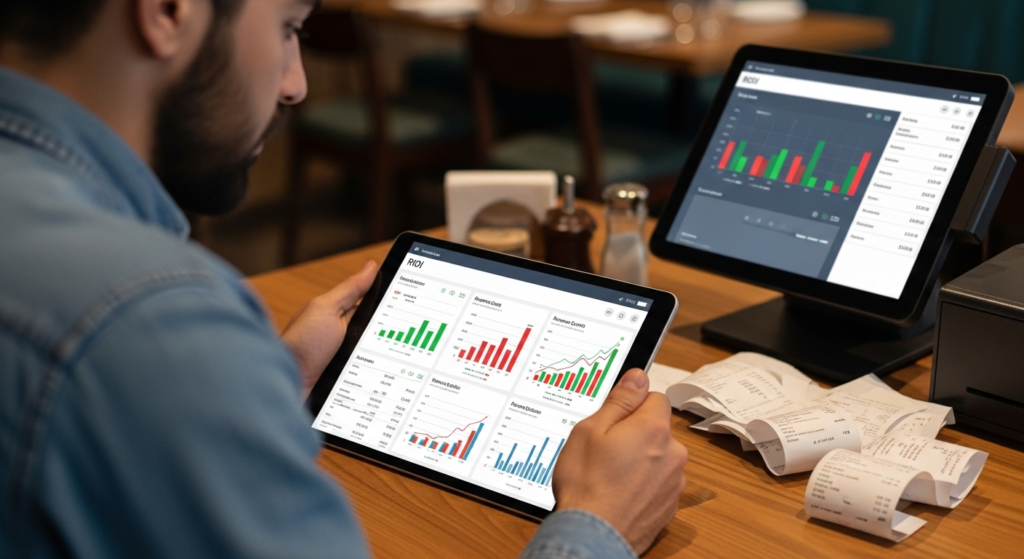
14. Marketing ROI
Measures the return on your marketing investment.
Formula:
(Revenue – Marketing Cost) ÷ Marketing Cost
15. Revenue Per Channel
Tracks which channels generate the most income.
Examples:
- Social media
- Paid ads
- Email campaigns
Why it matters:
Helps allocate budget effectively.
Voice Search & AEO Metrics (Future Growth Drivers)

Voice Search Queries
More users now search using voice:
- “Best restaurant near me”
- “Top pizza place open now”
Optimization tips:
- Use conversational keywords
- Add FAQs
Featured Snippets & Zero-Click Searches
Appearing in featured snippets boosts visibility.
How to optimize:
- Answer questions clearly
- Use structured headings
- Add FAQ sections
Tools to Track Restaurant Marketing Metrics
To effectively monitor these KPIs, use:
- Google Analytics
- POS systems
- CRM tools
- Social media insights
- Email marketing platforms
Common Mistakes to Avoid
- Tracking too many metrics without focus
- Ignoring actionable insights
- Not aligning metrics with business goals
- Failing to adjust strategies
Conclusion
Tracking the right restaurant marketing metrics is the difference between guessing and growing. By focusing on these 15 essential KPIs, you can optimize campaigns, increase profitability, and build long-term customer loyalty.
Start small, track consistently, and refine your strategy based on real data. This is how modern restaurants win.
FAQs (Voice Search + AEO Optimized)
What is the most important marketing metric for restaurants?
Customer Lifetime Value (CLV) is crucial because it focuses on long-term profitability rather than one-time sales.
How do restaurants measure marketing ROI?
By comparing revenue generated from campaigns against marketing costs using a simple ROI formula.
Which tools are best for tracking restaurant marketing metrics?
Google Analytics, POS systems, and CRM tools are among the most effective.
How can restaurants increase customer retention?
Through loyalty programs, personalized offers, and consistent engagement.
What metrics help increase restaurant sales?
AOV, conversion rate, and customer retention metrics directly impact revenue growth.